How we Christmas.

How we Christmas.

How we Christmas.

Building traditions with intention.

By Marissa Loper

What’s your holiday superpower?

Some of my friends bake and decorate delicious Christmas cookies that are (nearly) too beautiful to eat.

Others fill their homes with so many ornament-laden trees that they could apply to become national forests.

Then there’s the family down the street who plans and executes a Griswold-esque, multimedia light and music display in their front yard every year.

Me? What’s my special celebratory skill?

I’m the (self-appointed) queen of Christmas tradition.

And because ‘tis the season, I’m here to offer you some festive-tradition-planning inspiration—for both your personal life and your professional life.

[Cue falling snow, the Radio City Rockettes and “All I Want for Christmas Is You.”]

Tip #1: Carry forward some favorite traditions from your childhood.

Not sure where to start when shoring up your own holiday traditions?

If you’re lucky enough to have enjoyed a happy childhood, begin with a trip down Memory Lane.

For a heartwarming example, let’s jump into my time machine and set the destination for the Murphy home on Christmas morning in Birmingham, Alabama, circa 1983.

Blocking the view to the Christmas tree and our stockings, my parents are making all four of us children gather anxiously on the stairwell.

We know the drill. We must wait in rapt anticipation until our father has thoroughly inspected the living room to determine if Santa Claus has come.

After much audible lamenting and rustling around for what feels like an eternity, Dad finally yells out, “Nope! I’m sorry, children. Santa must have skipped our house.”

Then he and Mom step aside at last, opening the path to the tree. Squealing with laughter and excitement, my siblings and I blow by our parents like Indy 500 drivers and rip into our Christmas presents.

My parents’ annual lesson in the power of delayed gratification heightened the drama of my childhood’s Christmas mornings … and my husband Brook and I chuckle every year as we are now the ones who proclaim, “Sorry, kiddos, looks like Santa didn’t come.”

Tip #2: Feel free to borrow a different family’s ideas.

Hey, not everyone comes from a family background seeped in creative Christmas traditions.

No worries!

I’m here to testify that it is 100% okay to steal a few good ideas from someone else’s family. After all, imitation is the sincerest form of flattery.

When we were expecting our first child, my husband Brook and I polled the students in our Young Life group about their favorite Christmas traditions.

The question proved to be a good ice breaker to get a bunch of surly teenagers talking, and it turned out to be a veritable gold mine of ideas for us, too.

One young lady told us her parents gave her and her siblings new pajamas every Christmas Eve.

“I love it because I get to open one present early!” she explained. “And Mom loves it because we all look adorable in all the photos she takes on Christmas morning.”

Genius.

The “Christmas Eve New PJ” tradition has been a Loper staple ever since.

Tip #3: Sometimes traditions are, errr, bestowed. Roll with it.

When my kiddos were little, Brook’s mom winked at me and handed them an early Christmas gift.

They tore into the brightly wrapped box.

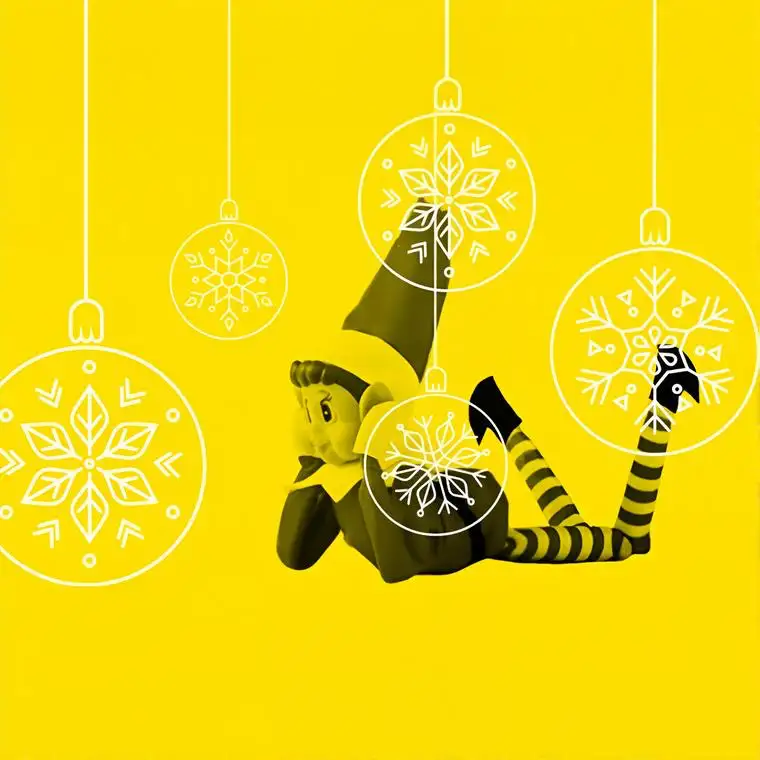
It was an Elf on the Shelf.

The grandmother was delighted. The children were thrilled!

The mom was miffed.

“Thanks a lot for basically handing me a chore that I must do every single night during one of the busiest times of year,” I remember grumbling under my breath.

(Side note: I genuinely lucked out in the mother-in-law department. No one loves Christmas like she does. I was simply an overwhelmed and sleep-deprived young mother who came to embrace and even look forward to the elf tradition. Eventually.)

So, after a deep sigh and a sharp glare at my husband (who wasn’t even trying to conceal his amusement), I forced a smile and asked the kiddos what they’d like to name our elf.

And that’s how a creepy little elf doll named Gilbert became a beloved part of the Loper family.

Please note, dear readers, that although I fixed my attitude about the whole elf tradition, I also made up some important rules to save my sanity.

Gilbert never gives presents or does anything “magical” whatsoever. (Inventing creative elf pranks and spending hours every night setting up those hilarious scenes is a Christmas superpower I admire in others, from a distance.)

From December 1 through December 24, Gilbert simply moves to a new hiding spot after he returns from his nightly check-in at the North Pole.

Sometimes Gilbert is super tricky and returns to the exact same hiding place because he knows we would never think to look for him there! (*Parents of young children, feel free to borrow this explanation when you forget to move your elf. You’re welcome.)

Today, my children are 20, 17 and 14 years old, so our elf tradition looks a little different. I put Gilbert out on December 1, and then our children move him every night. Brook and I get a big kick out of the role reversal.

Tip #4: Don’t forget to create holiday traditions at work, too.

Do you have a moment to hop back in the time machine with me?

Excellent. Let’s go.

It’s November 1987. We’re back in Alabama again, but this time we’re peering into the big picture windows of a fancy-looking store in Mountain Brook Village called The Dandé Lion.

Inside the shop, my father and I are talking to a salesperson. I am feeling super proud and grown-up because Daddy has asked me to help him order Christmas gifts for his top clients.

(My father was a career ad agency executive and was famous for his ability to keep his clients happy and loyal. Many of them continued to hire him for 30+ years. #goals)

After a few moments chatting with the salesperson—we are southerners, after all, and you can’t just dive headfirst into business matters without first inquiring about the other person’s family—my father asks to see the newest nutcrackers for sale.

I turn to my dad with a raised eyebrow.

“Didn’t you give your clients nutcrackers for Christmas last year?” I ask.

“Of course,” he answers. “I give my clients nutcrackers every year.”

“I don’t understand. Isn’t that boring? Shouldn’t you mix it up … and think of something new?”

Dad grins.

“No, Reese,” he explains patiently, “I don’t give them the exact same nutcracker every year. I give them a different nutcracker every year. After a few years, thanks to me, they’ll own a collection of nutcrackers. And every year, when my clients pull out their Christmas decorations, all of those nutcrackers will remind them just how long we’ve been working together. They’ll look forward to seeing what this year’s version will look like. And they’ll want to continue hiring me year after year because this tradition reminds them just how much I appreciate them.”

Damn. (That’s present-day Marissa’s reaction. I didn’t cuss back then.)

This particular pearl of wisdom has had a huge impact on me. When I opened my agency some 15 years later, I knew I wanted to start a Christmas tradition of my own.

Every year, Thinkwell sends out whimsical ornaments inspired by patient artwork from St. Jude Children’s Research Hospital … an incredible organization located right here in Memphis, Tennessee. All proceeds from these ornaments go toward taking care of families at the hospital and funding research to accomplish St. Jude’s goal of ending childhood cancer. Theirs is a mission I love to support.

A select group of our very top-tier clients get an even fancier Christmas ornament. For many years, we sent those top clients gorgeous crystal ornaments from Tiffany & Co.

Oh, how my clients (and/or their wives) loved receiving those little blue boxes every December! Some of my clients would hang their collection of a dozen or so crystal Tiffany ornaments from their chandeliers and send me pictures.

It was perfect.

Until it wasn’t.

In 2021, Tiffany shut down all business account discounts and, even worse, stopped making crystal ornaments. [Marissa shakes fists in the air.]

I was so upset. My tradition was ruined.

So, we pivoted.

I hired a Memphis artist—my incredibly talented friend Stacey Meredith—to create hand-painted ornaments. Stacey’s ornaments are beautiful, and I absolutely love supporting a local artist. (That said, if any of you know executives at Tiffany & Co.’s corporate headquarters, please deliver to them a huge lump of coal from me. They are not on my nice list.)

To round out our Thinkwell Christmas traditions, every single year, we send all of our clients and partners a custom printed, paper Christmas card.

Please note I did not say a digital message.

I also did not say a generic greeting card.

Good gracious, people, Thinkwell is a creative agency! It’s literally our job to design things people will actually pay attention to and appreciate.

We Thinkwellians recognize that sending an email (even if it includes a festive holiday gif) to an already overflowing inbox doesn’t impart the holiday wishes of peace and joy we want for our client friends.

But a clever, tangible surprise nestled amongst the boring bills and ads in your postal mailbox? Yes, please!

So, we write, design, print and mail a fabulous card every year that includes a photo of each Thinkwellian. In the card, we always offer our sincere gratitude. Without our clients, Thinkwell’s doors couldn’t stay open. And we want every single client to feel the love.

My father would be so proud.

So, what are you waiting for?

Traditions make us feel a part of something bigger than ourselves.

Traditions give us things to look forward to and count on.

Perhaps most importantly, they connect us to the people who follow the traditions with us.

So, hurry up! Build some fun traditions of your own.

And if you don’t know where to start, come sit down with me. I’d be delighted to help you. (Bonus points if you bring chai tea lattes to this brainstorming session.)

Merry Christmas, friends!

With gratitude,

Marissa

P.S. Don’t forget to move your elf tonight.
Personal stories stick.

Personal stories stick.

Personal stories stick.

Storytelling amplifies your message.

By Marissa Loper

Let’s pretend you’re a senior executive at a cocktail party during your company’s conference.

Earlier today, you gave a 20-minute speech from the main stage that outlined your plans for the coming year. Your colleagues said you did great, but you’re mostly just relieved the presentation is over.

So now you’re enjoying a chipotle mango chicken skewer and a well-deserved drink, and you’re hoping to hobnob with a few conference participants before you escape to the sanctuary of your hotel room.

Ah-ha! Here come some attendees now. They introduce themselves and shake your hand. Then they kick off the conversation.

What will they say to you?

To level-set, at many conferences, top leaders can achieve borderline celebrity status. Like corporate rock stars. It requires hutzpah for attendees to work up the nerve to speak to an executive. Hopefully they can remember SOMETHING about your speech from earlier today to use in the approach.

What did you say earlier? Will anyone remember? Do you remember?

It’s only been a few hours, but if the content of your speech contained only goals, facts and figures, my bet is the opening line will sound something like this:

“Great job today! I’m really enjoying the meeting.”


Because, well, that’s all they can think to say to you.

They can’t remember much about your 20 minutes on stage. Most conference speeches from corporate executives are not very memorable.

Unless you tell a personal story.

Carefully selected personal stories are game changers when you’re trying to connect with an audience and deliver an impactful message.

Embedding a personal story in your business presentation accomplishes several objectives:

  • A hook. Personal stories, when told well, capture the attention of the audience. Most of the time, when a non-professional speaker is on the docket, audience expectations are low. They anticipate a boring speech. Their eyes begin to glaze over even before the emcee has finished reading your title. However, you can leap adeptly over this very low bar simply by starting your speech with an interesting story that seemingly has nothing to do with your industry or topic. Suddenly, listeners are jostled from their conference comas.
  • Relatability. An invisible line forms between a speaker and the audience. It’s not your fault. The very layout of a ballroom automatically creates a dichotomy of you versus them. You’re on stage. You’re the one with a microphone. Clearly you hold the power. Bridge the gap by telling a relatable story that proves you, too, are a real person.
  • Stickiness. If the point of hosting a conference is to send attendees home with valuable information, a renewed pride in the company and excitement over its future and leadership, you’ve missed a big opportunity when the audience can’t remember a single thing you said. Help them out. Pick an entertaining story from your life and then relate that story back to the primary point of your speech. This tactic will not only engage attendees, but it will also help them remember your message.
  • Personal branding. A speech should be more than the audiobook version of your company’s business plan. It should be a reflection of who you are as a person. Being on stage offers an opportunity to create or improve your personal brand and showcase the kind of leader you are. Don’t squander the chance to demonstrate to the audience the values you hold, where you came from, the lessons you’ve learned and the experiences that make you uniquely you. The audience is curious about the human behind the headshot. What makes you tick? Give the people what they want.

But my message is about the business … not about me.

When I meet with new clients to discuss their content and suggest kicking off the speech with a personal story, some leaders worry out loud that they’ll sound self-absorbed. At the root of this objection is a delightful bit of humility … and usually also a tiny bit of fear.

“No one tells personal stories at my company. It’s not what we do. I want to toe the line. Could I just add in an inspirational quote from somebody famous or something?”

For the love of all things holy, no.

I’m already asleep, and we haven’t even started writing your speech yet.

After all, just because you have a captive audience doesn’t mean they should feel captured. Aim to captivate them instead.

And if no one else in your company tells personal stories, that’s all the more reason for you to do it. You’ll stand out.

If you master the art of storytelling, you’ll get asked to speak more often, which means more people will learn about you and hear your message. You’ll be top-of-mind when new leadership positions become available.

Storytelling is a skill that will advance your career.

I’ve witnessed good storytellers leapfrog past unmemorable colleagues time and time again.

Okay, I’ll consider a personal story. Where do I start?

Shameless plug time: I encourage you to contact me as your first step. Helping leaders tell their stories is my all-time favorite job here at Thinkwell. The work brings me joy. If you’d like my help, please reach out.

That said, I’m so passionate about convincing people to insert stories into their speeches that I’ll gladly share my “secret” recipe here for how to do it.

First, make a list of the important pieces of content that your attendees need to know. Include your business objectives as well as your personal objectives. Then prioritize each point.

Next, identify the very most important point … the one that answers this proverbial question: “If listeners don’t remember anything else, what’s the one thing you want them to remember?”

Finally, brainstorm events from your own life that could illustrate that most important point. Pick the most engaging, touching, inspiring, unusual or funny story. Then write about that experience, usually at or near the beginning of your speech.

Can you share an example?

Sure thing.

(Note: I’m sharing this story with permission from the client. I’ve changed her name and a few details.)

The background: Sarah recently became the SVP of a well-known consumer brand. Her predecessor is a beloved leader who has built the brand to its current status.

The challenge: How should Sarah introduce herself to this audience for the first time, honor the good work the former leader has done while also demonstrating she is not his carbon copy, and assure nervous stakeholders that her goal as the new SVP is to continue and even amplify the brand’s trajectory of success?

The solution: A personal story that ties together all of these critical talking points.

The story: Sarah, her siblings and their children participate in a fun family tradition every year. From their homes across the country, Sarah’s family members follow major horse racing competitions, placing nominal bets with each other about which horse will win each race. The winner receives a small pot of money and big-time bragging rights. This past year, Sarah’s young daughter participated in the family game for the first time and, incredibly, wound up winning the whole thing! Sarah’s daughter bet on the winner—and not just any winner, but the horse who won the Triple Crown (the incredibly rare honor bestowed to a horse who wins three critical races in a row). A photo of Sarah’s daughter with a huge grin appears on the screens.

Sarah uses that example to explain how, in her professional life, she’s betting on a winner, too, by joining this brand that continues to win awards year after year. Just like in horse racing, winning in business requires discipline, hard work and a keen eye on the competition … and that’s just what the audience should expect from Sarah as she leads this amazing brand into the future. Sarah then proceeds to outline her plans to continue the brand’s winning streak.

The result: Sarah nails her presentation. She comes across poised, confident and prepared. Sarah wins the audience over with a story about a quirky family tradition, and she delivers her message in such an engaging way that listeners physically lean in toward her. Sarah shows the audience that she is an accomplished, brilliant and strategic leader … and also a fun-loving mother, wife and sister.

After the speech, attendees line up to chat with Sarah.

  • “I love horses, too!”
  • “Watching horse races with your family is such a cool idea – I’m going to see if I can convince my brothers to start a family pool next year.”
  • “I have a five-year-old at home, too! What did your daughter do when she found out she had won?”
  • “I just wanted to introduce myself and tell you how excited I am that you’re leading the brand.”

The epilogue: Sarah told that particular story from the stage about five years ago. She pulled me aside recently and marveled that people still come up to her and talk to her about horse racing. One audience member even offered Sarah his tickets to the Kentucky Derby so she could take her daughter.

But I don’t know the first thing about horse racing.

Well, good, because that’s Sarah’s story. Think of something from your own life experience.

The options are limitless.

Case in point? Here are a few other fascinating stories from leaders I’ve worked with: his inspiring grandfather who lost a business during WWII … the antics of the speaker himself when he was a young punk … lessons learned from when she was a high school cheerleader … how his bride helped him rediscover how to fall in love … a bicycle crash when he was a child … her unpopular opinion that parenting teenagers is actually (usually) fun.

The list goes on and on.

So what’s your story?

Will you join me in the fight for more interesting, memorable and impactful conference speeches?

The return on investment (ROI) is hefty. You’ll give the audience an interesting personal story to relate to, you’ll make your message “stickier” and easier to remember, and you’ll stand out from your peers.

Sprinkle some humanity into your script and become a conference hero.

See you backstage!

Less sucky emails.

Less sucky emails.

Less sucky emails.

Writing emails readers will appreciate.

By Marissa Loper

Raise your hand if you would like to receive fewer bad emails.

Me, too.

Tragically, this article won’t tell you how to make your inbox less annoying.

Nope, this article is all about your outbox.

It’s about how to write and send less sucky emails of your own.

It’s about how you can make the business world a better place, one email at a time.

Keep reading to learn five email writing tips that will cause your boss, colleagues and clients to praise your name and call you blessed. Or, at a minimum, perhaps they’ll actually read and respond to your emails.

P.S. Now that I’m thinking of it, if you forward this article to your friends and people in your department or company and they actually put into action a few of the tips below, perhaps your inbox will reap the benefit, too. Feel free to share, and then cross your fingers.

Reality: Most people put very little thought into their emails.

Would you arrive at an important business meeting in your pajamas? Would you hop on a video call with a client without combing your hair?

(This is 2021, so I fear some people may actually answer sure to these questions. Sigh. Professional appearance is another topic for another day.)

Most people with a modicum of self-respect would answer no. I clutch my pearls at the thought of arriving unkempt to any professional situation.

Yet, on the daily, emails land in my inbox that are careless and disorganized.

Like it or not, your ability to communicate effectively using any medium (but especially email—a critical communications tool we all employ in the business world) directly impacts your reputation.

If your emails are thoughtless, sloppy or annoying, you can bet that’s how people will eventually feel about you.

What’s more, your ability to communicate also impacts how people view your boss, your department and even your company. There’s a trickle-up effect in play here.

Public service announcement: Pay attention to the emails you write.

I’ve been writing emails professionally for two decades. I know, it sounds weird, but it’s true: People hire me to write important emails for them. Why? Because communications (electronic and otherwise) are important, and I’m a word nerd.

I can practically feel your pity right now. Never fear, email writing is just one little thing we do at Thinkwell … our other services—like branding work, logo creation, marketing pieces, videos, websites, etc.—are light years more glamorous.

And … also we’re professional email writers.

Since you can’t hire us to write all of your emails, I’m going to do the next best thing. I’m going to offer you the top five email tips I’ve learned over the last 20 years.

Here goes:

Email tip #1: Compose a descriptive subject line.

I cannot stress enough the importance of this tip. Hence, I’ve listed it first.

Even the most brilliant people I know often skip this step, and those folks are missing out on a simple but highly effective way to make their emails better.

Pretend your email is a book. (Some of them are. Shame on you! More on that topic later.) What would the title be?

Now think of your inbox as a digital bookshelf. Just like on the spines of actual books on a shelf, your inbox typically only reveals the title and author. So when we need to go back and find an important email or document that was emailed to us, most of us sort by the sender or subject.

Help us quickly retrieve emails from you by writing a descriptive subject line that lets us know we’ve found the right email before we even click on it.

Examples of excellent subject lines:

  • Timeline for video draft
  • Please review: 2021 Business Plan, v2
  • Q3 earnings results

Examples of terrible subject lines:

  • Hello
  • Take a look when you have a minute
  • RE: RE: RE: RE: RE: Lunch?

That last one is a real pet peeve of mine. It’s easy to fall into this trap, and usually it happens because we don’t stop to change the subject line of an email stream when the topic changes.

Here’s how the scenario might play out: I send you a quick email to see if we can meet up for lunch. We go back and forth a few times until we agree on a location and time to meet. And then you realize that you also need me to review a PowerPoint, so you just hit reply to our current stream, write me a quick note that says, “Oops! I almost forgot to send you this!” and attach the document.

It happens all the time. But if I don’t file that presentation right away and then go back to find it later, it’s going to take a lot of effort to dig it up. What’s worse, if I decide to de-clutter my inbox, I might accidentally delete this email from you because I don’t feel obligated to save our conversation about Chicken Salad Chick.

So, resolve to take the extra three seconds required to compose a better subject line.

Trust me, this tip is a micro-change that can make a big difference to your email recipients.

Email tip #2: Write less.

I hear people say all the time, “Less is more.”

Hog wash.

Less isn’t more. Less is better.

One of our clients is the VP of Sales for a large medical device company. One day he casually mentioned to me that if he can’t read an email without scrolling, he deletes the email immediately. His logic? If you can’t fit what you’re trying to say in the space he has on his screen, you’ve selected the wrong communications vehicle. You should book a meeting with him, and then you should walk him through the content.

Yep, you read that correctly. My client would delete the email without even telling the sender.

I bet his team learned to be concise when they sent him an email! I certainly did.

Sure, that’s an extreme example. Thankfully, most people don’t have strict rules about deleting emails that are too long. But they might as well. In a day when a zillion other priorities are vying for our attention, your long-winded email raises our blood pressure AND dilutes your message.

“Get to the point already!” we mutter to ourselves. And then we often get so frustrated we click to the next message. You’ve lost our attention.

Get to the point, quickly. Or request a meeting instead.

Email tip #3: Consolidate or send multiple emails.

I know, I know. This tip seems contradictory. Consolidate or send multiple? Those actions are opposite!

Yes, I know. Hear me out.

On the first draft of this article, my tip was all about consolidating emails. “Our inboxes are a hot mess. Don’t unleash a flood of emails. Be kind and consolidate.”

And that’s solid advice … usually. But then I reflected further and realized that a consolidation tactic isn’t always the best choice.

Sometimes by cramming too much into one email, the recipient gets overwhelmed.

Alternatively, if you have a gazillion requests or questions, it’s unwise to dump a half dozen separate emails into a person’s inbox.

In other words, this particular tip is a smidge subjective.

So, let me clarify. Here’s my general rule of thumb on singular vs. multiple emails:

  • If you need two or three specific but separate things and each one requires a bit of explanation, send independent emails with distinctly different subject lines. This approach is less daunting for your reader. The recipient can easily respond to each email with the exact information you’ve requested.
  • If you have a long list of questions for the reader, send one email with an organized, bulleted list. The reader will be more likely to respond by dropping answers back into the same list.

Either way, don’t deploy emails like you’re taking down enemy aircraft. Overusing email constitutes communications abuse and must be stopped.

Email tip #4: Use bolded headers to break up long emails.

Brevity isn’t always an option. Sometimes we need to send an email with lots of detail.

For example, when companies hire my team to develop a communications plan for an event, we frequently advise them to include an email sent about a week prior to the event with the following subject line: “What to wear and what to pack.”

(By the way, we’ve found the open rates of emails with this subject line are off the charts. As it turns out, worrying about wearing the right thing is pretty universal.)

Okay, so for a communication like that, you need to drop a lot of details into a single email. The attendee will likely flag that email and come back to it a few times while they’re prepping for the event.

So, in this scenario, a long email is a good thing. Offer alllllll the details in one place. Yes, please!

But for the love of all things holy, break up that long email into sections. And then give each section a bolded header. Use descriptive words like “Attire,” “Weather forecast” and “Evening events.”

Why? Humans like to skim. We can only take so much content at one time before attention deficit syndrome kicks in. But if the writer has “chunked up” the content into logical sections with bolded headers, our brains smile. We can skim the section headers to find just what we need, and then read those topics in more depth.

Adding bolded headers to your long emails helps the reader stay on pace with you.

This tactic also works well for long blog posts. Ahem.

Email tip #5: Add a little humor when appropriate.

Sometimes we forget there’s a real human on the other side of an email.

I cringe when people blabber on and on about things that don’t matter to the reader. And other times I die inside when people use meaningless jargon to sound smarter. Both are bad ideas. (And, yes, I should really consult a counselor about how I internalize other people’s poor choices.)

I work with a lot of CEOs, VPs and other businesspeople with fancy titles. Don’t waste their time by sending senseless emails. But gracious, it’s not like they lost their sense of humor completely when they took on the big job. Believe me, most high-ranking executives appreciate someone who is confident enough to make a joke or not take themselves too seriously. When most of your inbox is filled with people trying to impress you, it’s refreshing for someone to be honest or make you laugh.

Be memorable! Make people happy to see your name pop up in their inboxes.

I’m notorious for replying to work emails with a clever image or GIF just to startle people out of their email stupor. (Note: Use this idea sparingly. Sending too many memes will make you appear like a bored teenager.)

I also like to crack jokes, use a little sarcasm, or throw in a line from a song every now and then. Just to break up the monotony or make someone chuckle. It’s a worthy endeavor.

I’ll share one last tip in this category. It’s a good thing to show some personality in your email. My team and I swap out the logo in our email signatures at the beginning of each new month. Why? Because we think it’s fun to dress up the lightbulb in Thinkwell’s logo with a seasonably appropriate hat or festive costume. It’s a subtle wink to our branding and our sense of humor here at Thinkwell, and hopefully our clients and partners have enjoyed seeing our St. Patrick’s-branded logo this month.

Bottom line: Write emails unto others as you would have them write emails unto you.

So now that I’ve completely butchered the Golden Rule, here’s a recap of the top five ways to write less sucky emails:

  1. Compose a descriptive subject line.
  2. Write less.
  3. Consolidate or send multiple emails.
  4. Use bolded headers to break up long emails.
  5. Add a little humor when appropriate.

If you’ve read this far down the post (thank you!), my bet is you have some email to catch up on.

Better get to it! And best wishes to you on this worthy endeavor.


When it’s terminal.

When it’s terminal.

When it's terminal.

Loving someone through those final days.

By Marissa Loper

Six months ago today was my 43rd birthday. It was also the day I wrote my father’s eulogy. 

So today I’m taking a break from blogging about work-related topics I love (like branding, marketing and communications) to write about what my father went through and how my family coped.  

Warning: You won’t find rainbows and unicorn glitter in this post. It’s about real life, real suffering and real loss. And I’ve labored over every word.  

Writing down these thoughts has certainly helped me sort through my emotions, but my true prayer is that this post will help another family who finds themselves in a similar situation. 

Okay, that’s enough of a preamble. It’s time to tell the story.  

My hero is in Heaven. 

Michael Thomas Murphy (known as “Dad” or “Daddy” to his four adoring children and “Big Daddy” to his eight grandchildren) died on May 1, 2020. On May 6, we celebrated Dad’s life in a nearly empty church with our family trying our best to practice this new idea called “social distancing” while more than 1,000 people watched the service on YouTube. 

The wonderful obituary my brother penned didn’t contain the phrase “he died peacefully in his sleep” because that would have been a lie. Dad fought so very hard, right up until the end.  

Here’s a condensed health history to give you a bit of context: While the world was just beginning to understand the implications of COVID-19, my father was battling two cancers: multiple myeloma (cancer in his bone marrow) and sarcoma (cancer in his connective tissue).  

With his ever-present positive attitude and unstoppable spirit, over the prior year Dad had already survived countless rounds of chemotherapy, radiation and even an incredible bone marrow transplant to fight the multiple myeloma. Then we discovered he also had sarcoma.  

The oncologist gently asked Dad if he wanted to fight this new cancer after having already been through so much. Without missing a beat, my father looked right at him and said, “Yes. Absolutely. I want to see my grandchildren grow up.”  

So he fought. Shortly after the surgeon removed the tumor in Dad’s thigh, the sarcoma spread to his lungs. Dad barely survived the intense, three-day chemotherapy treatment they gave him in the hospital to combat this new crisis.  

Because it would have required multiple rounds of that same extreme chemo to break up the cancer in his lungs, the oncologist tearfully explained to us that Dad’s condition was terminal, and he recommended stopping treatment. Hospice care, he added quietly, would ensure Dad would be comfortable and would not suffer in his final days. 

We were, in a word, devastated.  

A new goal emerged: Get Dad stable enough to move him from the hospital to his home for hospice treatment. We feared the ICU would soon be overflowing with COVID-19 patients, so we were grateful when we got the go-ahead to transport Big Daddy home via ambulance.  

Dad arrived home on March 12, 2020. President Trump declared COVID-19 a national emergency the next day. 

When my body was in Memphis, my heart was in Birmingham.  

I grew up in Birmingham, but I live with my husband and our three children in Memphis—a little more than three hours away by car. That spring, I spent a lot of time in my parents’ home.  

Since I live out-of-town, the daily burden of caring for Dad fell on my mother and my siblings, and I felt guilty when I wasn’t there to help.  

And when I was in Birmingham, I hated being away from my husband and children. Someone described it to me once as feeling like you’ve been sandwiched—needing desperately to care for your parents and your children at the same time. And I felt that I wasn’t doing either very well. 

My dad not only taught me how to live, he showed me how to die. 

Because of the amount of tissue removed from his thigh and how long he had been confined to the bed, Dad was unable to use his legs. He spent his time either in his bed or in the living room chair (thanks to the help of a handy contraption called a hoist).  

At the time I remember deeply feeling the irony of my friends who were vocal on social media about the hardships of being confined to their houses during COVID. My dad couldn’t even walk, but I never heard him complain. Not once. 

What I found truly remarkable was that, even on his worst days, my father never stopped smiling and being his kind, positive, optimistic self. I have never been prouder of a human being than I was of my father in his final days. I could tell Dad was trying his best to make things a little easier on his family, and I admired his refusal to become angry, bitter or depressed. 

Nothing could have prepared my family to watch someone we love so deeply suffer so much.  

While I will always be grateful for the quality time I spent with my parents during those months, I realize now how traumatic it was on all of us. Witnessing Dad’s decline was torture. Every night I would cry myself to sleep in their guest bedroom.   

I have no idea how my mother held it together. She rarely left the house herself because of COVID, and for the same reason none of her friends could drop by for a quick visit or even whisk her away for dinner or a movie. I understand that these situations are always somewhat isolating, but because Mama was caring for her very sick husband during a global pandemic, she was truly alone most of the time. It was heartbreaking. My mother is one incredible woman, that’s for sure.  

Just a few days before Dad passed away, I traveled to Birmingham to see if I could help Mom sort out the medications Dad needed to be comfortable. Now I should note here that I have zero medical training but some decent organizational skills and an overabundance of resolve, so I brought my notepad and pen and pretty much asked the hospice nurse to put me through medical school that day.  

Which meds should we give Dad when he couldn’t stop coughing? If he falls asleep, should I wake him up to give him the next dose? How much pain medication is too much? Why doesn’t he ever seem to be comfortable? What’s the best way to counteract his anxiety? Are there warning signs to look for when a person is about to die? 

I really grilled that poor nurse, and he patiently answered each question.  

Finally, the nurse looked at me and my mother and my sisters and said, “There is another option, you know.”  

No, we didn’t know.  

He explained that only a few miles away was a small hospice care facility. We could move Dad there, and he would have his own private room. Dad would receive around-the-clock, professional nursing care and would have access to more powerful medications that could help him rest. We could visit him any time.   

I turned to my mother. She was sobbing. She nodded her head and said, “Yes. Let’s take him there. I want him to receive the care he needs and deserves.” 

The nurse left the room to call for an ambulance and to alert the hospice facility that Dad was coming.  

When he came back into the room, he looked so dejected. He pulled me aside. 

“I am so sorry. I was wrong. There are new regulations that I didn’t know about. Your father will only be allowed to have two visitors.”  

“Not a problem,” I told him. “We’ll take turns.” 

“No, you don’t understand. Because of COVID restrictions, your dad will only be able to have one visitor at a time and only two visitors total. And they must be the same two visitors. I am so, so sorry.” 

He looked at me apologetically and let the news sink in.  

“So what you are saying is, I have to say goodbye to my father right now?” I asked. The nurse just nodded his head and graciously looked away while reality hit my heart. 

The ambulance was pulling into the driveway. I waited my turn to talk to Daddy, then I jumped in for a hug. I am not even sure exactly what I said, but I know I told him how much I loved him. And that was all I really had time to say before the EMTs loaded Daddy into the ambulance and transported him to the hospice facility.

The next morning, with a heavy heart, I packed up and drove back to Memphis, praying the whole time that God in His grace and goodness would take my father to Heaven and heal him there.   

My father died the following day. He was 71 years young. 

So what did I learn? 

A lot.   

So much.  

Enough to cover a series of blog posts.   

But I’ll share just a few of the biggies here.  

Advocate tirelessly for your loved one. While your whole world may revolve around one sick person, it turns out that doctors and nurses are caring for countless sick people at the same time. The demands of their job can be overwhelming, and sometimes things accidentally slip through the cracks. That’s why advocating for your person is so crucial. My family and I learned how to read the machines that were monitoring Dad’s vitals. If Dad’s numbers slipped or if he was thirsty or hungry or needed medicine or fresh linens, we made it our job to find a nurse to help. We felt like nurse stalkers. (We also showered those nurses with praise and gratitude. Nurses are absolute saints.) We swallowed our pride about our ignorance and asked Dad’s caretakers and medical team to slow down, clarify or explain treatments until we understood. When Dad was at home and Mom hired sitters to help with his care, my siblings and I created a notebook that we named “Who’s Who in the Murphy Zoo.” Inside we included details about my father’s preferences, talked about his illness and featured photos and facts about each person in the family who might show up on a given day and how that person is related to Dad. Fun fact: We also included my parents’ dog Flossie, who is honestly their fifth (and likely favorite) child. 

If you aren’t a doctor, become a scribe. You know, my parents had four children, and not a single one of us went to medical school. Can you believe that? A doctor in the family would have been so handy. But no such luck. We’re a bunch of creatives and educators. So we put our non-medical skills to good use. Whoever was with Dad would text details to the rest of us. Sharing what we knew was critical, particularly since we took turns at the hospital and then later took shifts with Dad at home. We kept extended family informed of what was going on, too. Thanks to COVID, Dad’s siblings couldn’t visit, so I texted my aunt and uncle frequently. (This particular communication string turned out to be such a blessing, by the way. Reconnecting with them, even under the circumstances, was so much fun. I will always be grateful.) Also—and I can’t recommend this tip enough—we found it very helpful to keep up with key dates and milestones on a single piece of paper. Endless days in hospitals and at home became a blur. We lost our sense of time. We needed to be able to tell Dad’s story to each new specialist or caregiver we encountered, and those people would ask us when events occurred. Thank goodness for our cheat sheet! 

Let your people love on you. This one is hard. A disease like cancer can be long and drawn out, and I began to feel guilty that people continued to reach out and want to help. But oh, we needed that help. Our friends prayed for us regularly, and we coveted those prayers. People sent over meals—homecooked and purchased from our favorite restaurants. My friends kept me stocked up with Dr. Pepper and red wine. (My friends know me well.) My mother’s friends dropped off toilet paper, which was truly a special gift at that time! After Dad died, a friend of mine from church had groceries delivered to my home that my picky teenagers would like, and she also included lavender bath salts just for me. So thoughtful! Notes and cards in the mail made us feel a little more connected to the outside world, even when we were so very isolated. Text messages and phone calls were like rays of sunshine. My family and I treasured every little act of kindness. Our people helped us get through.  

Hospice care is really hard. I’m not sure if my lack of understanding of hospice came from something I saw on TV or in a movie, but it definitely looked different in reality. I thought there would be a nurse in my parents’ home that took care of Dad around the clock. Nope. Once a week, a hospice nurse checked in on Dad. And once a week, a different nurse would come over to bathe Dad. Everything else was up to us. And that was terrifying. I’m not qualified to change a Band-Aid, but I somehow had to learn how to drain fluid from my father’s lungs. I gave him medications. I decided when it was time to call the 24-hour hospice line (thank God for that resource!) to ask for different medications or for advice on how to help Dad. I have never been so unsure of something so very important. In my head, I think I had glamorized the idea of dying at home. While having Dad at home did make it easier for us to be with him in his last days (particularly with all of the COVID restrictions at the hospital), it was very, very, very hard and scary.  

Some people do not die peacefully in their sleep. Some people do, and I am genuinely glad for those people and their families. I think everyone would prefer to pass calmly from this life to the next. What I didn’t know is there is a medical condition called terminal restlessness. Some people at the end of their lives experience anxiety, agitation and the lack of ability to be comfortable. I had no idea this was even a thing. Every doctor we spoke to had assured us that hospice care would mean Dad would be comfortable. So when he was anything but comfortable during the last week of his life, I assumed we had him on the wrong medications. I was overcome with guilt that I didn’t know how to make him feel more at ease. Finally a nurse gave what my father was experiencing a name, and when I looked it up, I realized that Dad’s symptoms are fairly common in terminal cancer patients. We were not giving Dad inferior care, and that at least was a relief. I was also able to call a couple of my friends whose parents have terminal cancer to warn them that this is a possibility, and they were grateful for the knowledge.  

Be creative with the time you have. Dad and I spent long stretches of time together, and we managed to have some fun despite the circumstances. While I am an unsteady and unskilled nurse, I am pretty good at distracting a person from pain, telling stories, asking questions and making people laugh. One day when Dad was feeling pretty yucky, I ran a harebrained idea by him. He agreed to it. So I posted a selfie of the two of us on Facebook, mentioned that we were feeling a little lonely, and asked my friends (and his) to pose questions to my fun and wise father about anything they wanted to know. We called it “Ask Mike.” Our friends delighted us with their questions! Dad would answer the questions out loud and I would transcribe his answers to the post. I learned so much about my dad that day—including why his father named him Mike and why he admired the artist Michelangelo. Sometimes when I am really missing Dad, I pull up that post and read a few of the stories he shared that day. 

It’s okay to be sad about what you’re missing. Last spring I felt selfish and guilty that I was sad about missing things that were happening at home. I especially was bummed during my daughter’s volleyball tournaments. I knew there would be plenty of volleyball in my future and that I was focused on the right thing, but I found myself getting irritated with myself when I longed to be cheering on my daughter instead of sitting with my father. Often I wished I were curled up beside my husband or laughing with our sons, and then I would chastise myself for feeling that way. My advice now? Drop that guilt and let yourself be sad when you need to be sad. Feeling sad doesn’t make you a bad person. It makes you a real human being. 

Be grateful for the benefits of cancer. Yes, you read that correctly. As horrible as cancer is, there are a few benefits. Unlike a fatal accident or a heart attack, we knew the end was coming, so we could (somewhat) prepare for it. My dad planned his entire funeral. He picked out the hymns and the verses and even told the pastor that he wanted each of his four children to deliver a eulogy. What a blessing! We knew exactly what Dad wanted, and we were able to honor all of his wishes. We also were able to get some of his affairs in order to prepare Mom (a little) for life without him. I had time to tell my daddy just how proud I was of him, and he told me how much he loved me. We left no words unsaid. That is a huge blessing. I am so very grateful. 

If you’ve made it this far into the post, wow, thank you. I know it’s a lot to digest.  

And if you are going through something similar, please don’t hesitate to reach out to me. I’m happy to share what I know or just sit still and listen. I would also be honored to pray for you.   

I love you big time and always, Daddy!